

Transparency & Methodology: To provide our research and M&A technical audits, we partner with marketplaces. If you click a link and inquire about an acquisition or make a purchase, we may earn a commission. We only recommend assets that meet our technical standards. [ Learn more about our review process.]
In the current startup environment, polls show that most top-performing software entrepreneurs recognize a significant advantage in advanced generative AI. They also believe it provides a competitive edge for their startup projects. Yet the financial reality is much grimmer. 62% of wrapper startups in M&A deals fail to meet their financial targets due to inadequate due diligence during valuation.
READ MORE: 2026 Valuing An AI SaaS Overview
For many owners and developers, an important question arises. Why do some software startup companies command 10x multiples? Meanwhile, others struggle to secure even a 2-3x valuation. The answer lies in a brutal valuation chasm. On one side, there is a wrapper startup. Their proprietary data may be exposed. This happens because they’re on a thin interface over third-party APIs. On the other hand, some startups possess their valuable proprietary data and technology. Thus, they have secured their intellectual property and data infrastructure to establish connectivity.
Startups With Intellectual Property vs. Wrapper Startups
So-called wrapper startups often face a gap in margins compared to startups with an IP. This difference results from securing their intellectual property and proprietary data. Most enterprises own proprietary IP, whereas many wrapper startups rent IP without securing their proprietary data. Many business owners, developers, and entrepreneurs leave their proprietary data spread across software tools. This results in a substantial decline in their startup’s value.
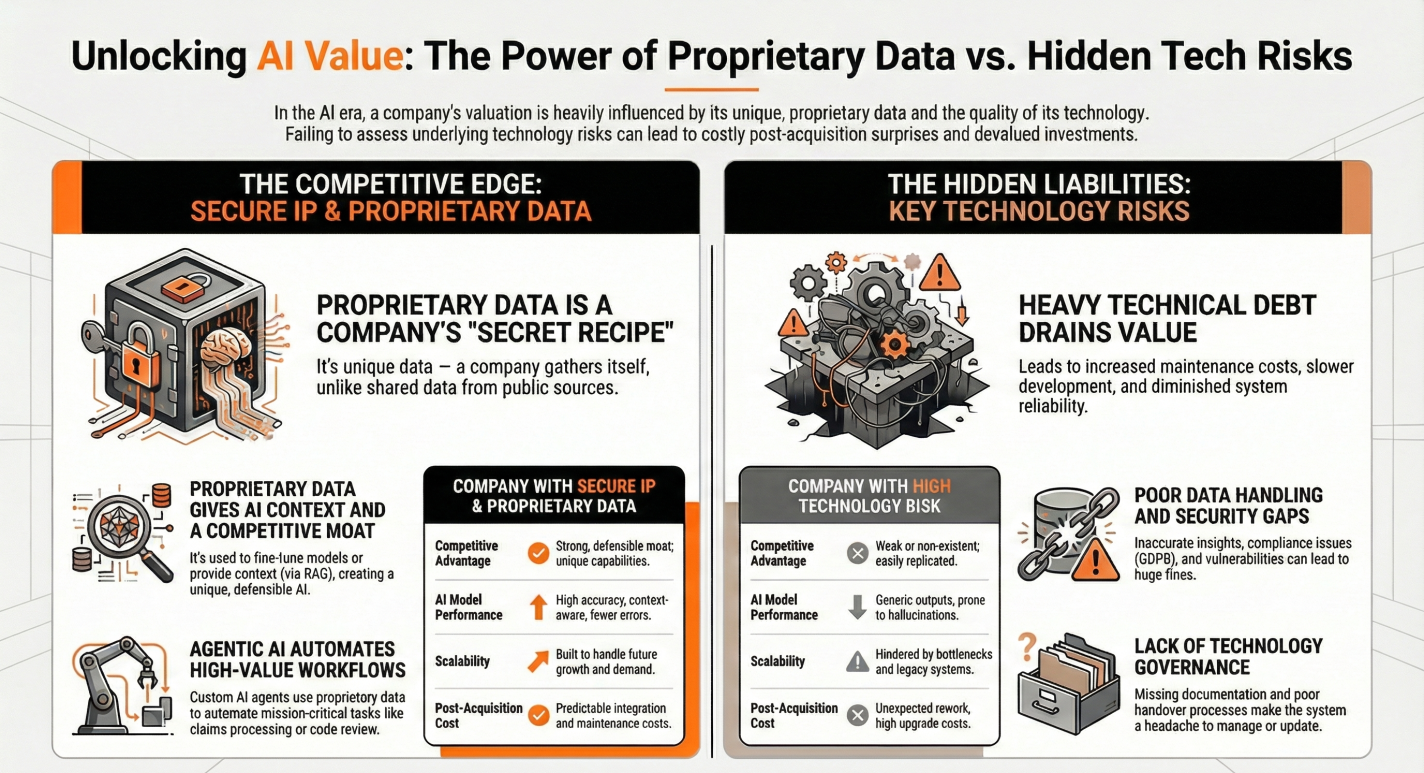
In the M&A realm of software IP and proprietary data, there is limited value if its held by an individual or third party. For an investor, a startup’s total reliance on a third-party API without a partnership wouldn’t be of interest. Therefore, a business that has not secured its data cannot fully transfer or control its data. In some instances, the deal may include a substantial earn-out to transition the rented value. Still, it is a major diluter of value or a total deal killer if this is not possible.
Many wrapper startups use the same IP and software as startups with secured proprietary data and IP. This was evident in many early AI startups. During that time, APIs were plentiful. Developers selected different APIs for different layers of their applications. Now, software like Google Antigravity can do it all, from front-end to back-end software development.
A Startup Proprietary Data Moat
In this new age of AI, language models are not the only answer for a wrapper startup. Many wrapper startups lack the missing piece of their software puzzle, their proprietary data. Using the right language model and API acts as a moat, but only if it is accessible and secure. According to Metaphats, 82% of enterprises have proprietary data silos that improve workflows and increase revenue. Many startups break down these silos across platforms and tools. They create a surgical blend of data and AI. This blend reduces multiples caused by inconsistent data across workflows and systems.
READ MORE: Google’s New Antigravity Now Plugs Directly Into Your Enterprise Data
There are several ways to consider which AI or API a startup should use to launch its project, depending on its niche. The first option is using an AI language model engine that secures your proprietary data and IP. The second is having a relationship with the AI company that powers your enterprise. While both allow companies to exist as structures, they use a language model that can secure data and IP that can be swapped and can be fine-tuned to increase revenue and workflows. Arguably, a startup’s real value lies in its tooling and software rather than the model. But in many wrapper startups, all the value comes from the services, which is why the business has lower margins.
Google Antigravity For Wrapper Startups
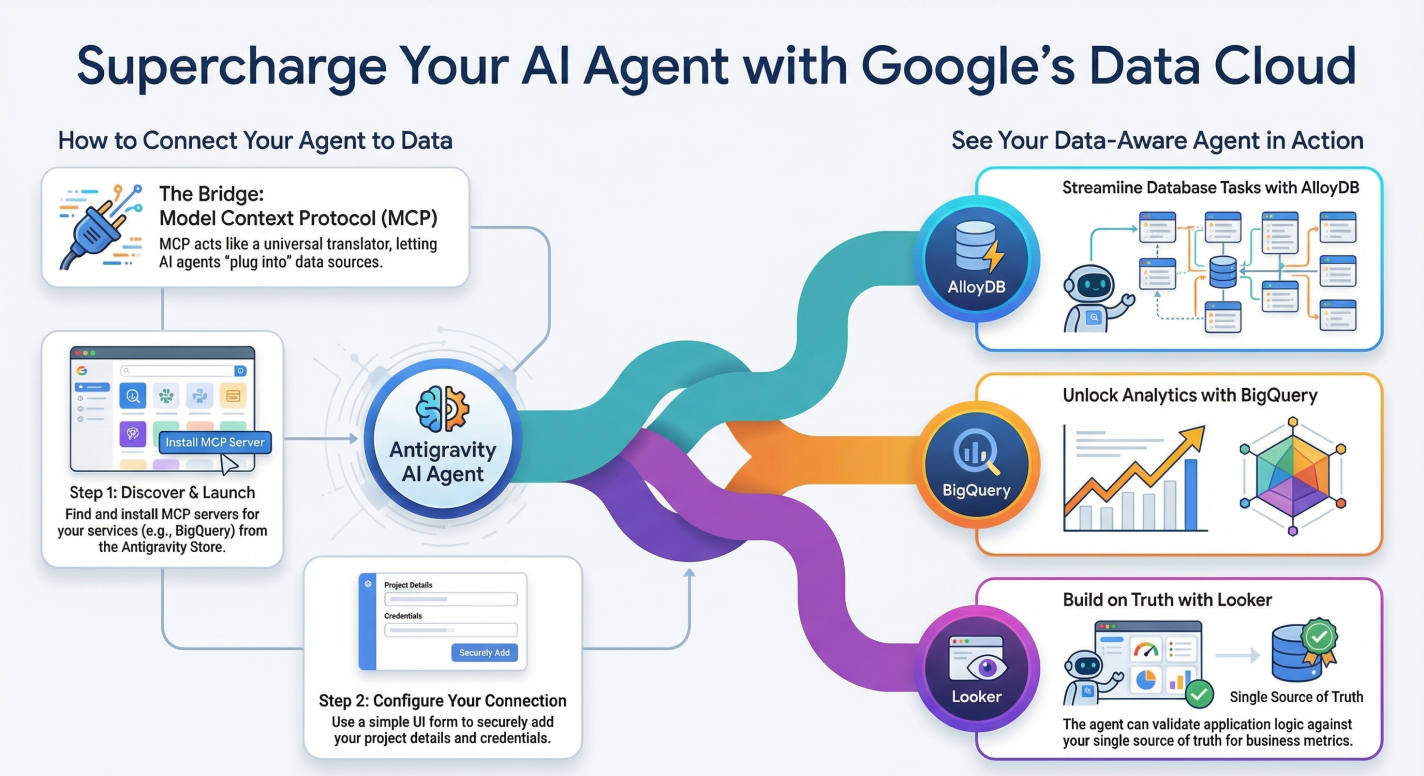
The state of AI is shifting from simple chat interfaces to autonomous agentic AI agents capable of planning, executing, and refining complex workflows. For wrapper startups, Google’s new Antigravity, an AI-first Integrated development environment (IDE), is taking wrapper startups to a new paradigm. For many startup owners, understanding the true meaning of an IDE truly means advancement in their business. Indeed, it is a core, data-aware component of the development fabric. For a wrapper startup, direct, secure access to enterprise data services for AI agents has a transformative effect. These agents evolve from abstract websites and apps into applications within a total-aware partner.
Google Antigravity integration is a leap that elevates startups with AI agents from simple code generators to active participants in the development workflow. Rather than startups using another tool, an agentic AI agent serves as a specialized teammate. This teammate is capable of performing complex, data-centric roles. These roles can directly increase margins.
The Technology Risks For Wrapper Startups
As we’ve seen in the software space, Wrapper startups frequently struggle to grow within AI Technology. For many startups, poorly designed workflows act as a hidden budget drain, leading to inefficient processes that increase operational costs. I spent weeks diving into LLM research. During this time, I’ve noticed key advancements. I also gained a clearer understanding of how AI and LLMs can enhance startups after reviewing an LLM research paper titled Artificial or Just Artful. The research explores the tension between pretraining objectives and alignment constraints in Large Language Models. The researchers specifically investigated how language models adapt their strategies when exposed to test cases. The research shows that incorporating IP data can alter an LLM’s responses and improve task outcomes. It also shows how a wrapper startup can use its proprietary data to fine-tune the AI and boost margins.
AI Agents and The Model Context Protocol
Many startup owners are feeling pressure to keep up with the workflows required to remain competitive in the AI era. As with many organizations, they understand their workload and its impact on their bottom line. For many wrapper startups, new AI advancements may take longer to implement and affect their profits, as owners must coordinate an implementation plan while building the startup. Many organizations have entered a new era of AI, leveraging it to increase their AI workload. What are organizations using to improve their ads? Agentic AI agents. AI Agents handle tasks without human intervention and are equipped with reasoning, memory, and problem-solving capabilities.

The catalyst for AI agents is the Model Context Protocol (MCP), an open-source standard. MCP provides a universal, standardized communication layer. It eliminates the need for custom-coded integrations. This capability enables any AI model to connect to any data source seamlessly. MCP serves as the backbone for AI agents. The technology can help startups reduce their human workload. It can develop context-aware, agentic AI agents that analyze and act. This accelerates troubleshooting and task handling.
A Wrapper StartUp Technical Reality
For wrappper startups considering an exit or merger, investors conduct due diligence (TDD). This helps separate market hype from operational reality. For wrapper startups, an assessment often reveals red flags. These red flags can indicate that the business poses a high risk of liability. This is due to a lack of IP or proprietary data, rather than to the business’s high value.
In recent research, I identified a critical finding. Heavy technical debt and a lack of proprietary data are the primary drivers of depressed margins for wrapper startups. These factors increase maintenance costs. They create a bottleneck that slows future innovation and generates hype around technologies that do not deliver real business impact. Finally, using insufficient tech stacks on incompatible platforms also leads to higher future AI integration costs.
Conclusion
A wrapper startup’s margins reflect its project’s future and the risks it takes to grow. When launching a startup, wrapper startups are riskier if proprietary data and IP haven’t been secured. To improve margins, owners should ensure their IP is trained to handle specific tasks, thereby increasing revenue. To maximize margins, businesses should resolve their technical debt and document all processes to ensure that proprietary data is structured, cleaned, and secure.
Disclosure: This Page may contain affiliate links, for which we may receive compensation if you click on these links and make a purchase. However, this does not impact our content.